If you ask any diver about their ultimate bucket list, encountering a whale shark is almost always at the top. The whale shark is the largest fish in the sea, and despite having “shark” in its name, it possesses an incredibly gentle and docile nature. These massive creatures can grow up to 12 or 15 meters in length, yet they move through the water with a grace and serenity that leaves onlookers in absolute awe.
Their behavior is characterized by a calm presence, and they are famously indifferent to the presence of humans. Unlike other shark species that hunt large prey, whale sharks are often found cruising slowly near the surface to bask in the sun and feed. Understanding the behavior of the Whale Shark is not just about the excitement of the find; it is about preparing ourselves to be respectful guests in their underwater world.
The Secret of the Spots: Nature’s Unique Fingerprints
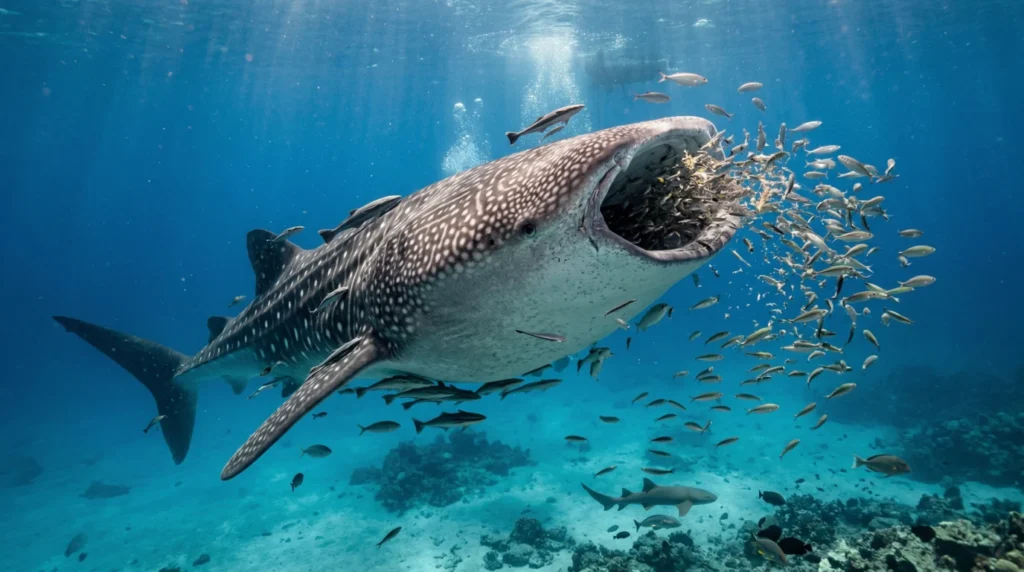
The white spots and stripes scattered across the dark grey skin of a whale shark are not just for decoration. These patterns are as unique as a human fingerprint. No two whale sharks have the same pattern of spots. Scientists and conservation groups use photos of the area behind the shark’s gills to identify individuals, allowing them to track migration routes and population health across the globe.
At King Andaman Scuba , we take our divers to the most vibrant dive sites where sightings are possible. If you are lucky enough to see one, pay close attention to those spots—you might be looking at a world traveler that has crossed entire oceans to visit the Andaman Sea.
Diet of a Giant: How Do They Grow So Big?
Despite having a mouth that can be nearly five feet wide, whale sharks feed on some of the smallest organisms in the ocean: Plankton . They are filter feeders, which means they swim with their mouths open to scoop up tiny shrimp, fish eggs, and microscopic plants. You might see them “ram feeding” by swimming forward or even “suction feeding” by hanging vertically in the water and gulping in nutrient-rich currents.
Migration and Swimming Patterns: Travelers Without Borders
Whale sharks are true nomads. They migrate seasonally to follow food sources and find optimal water temperatures. While they are relatively slow swimmers, averaging about 5 kilometers per hour, they are capable of incredible feats. They have been known to dive deeper than 1,000 meters to find food or regulate their body temperature. In Thailand, the best season to see them is usually from February to May when the waters are rich with nutrients.
Are Whale Sharks Dangerous? The Truth Behind the Name
A common concern for beginners is whether whale sharks are dangerous. The answer is a resounding no. They do not have the large, sharp teeth used for tearing meat like other sharks; instead, they have thousands of tiny vestigial teeth that play no role in feeding. The only real danger comes from their sheer size—a sudden flick of a massive tail could cause injury if you are too close. This is why maintaining a safe distance is the most important rule when diving with them.
Reading Body Language: Is the Whale Shark Happy or Stressed?
A relaxed whale shark will swim slowly and steadily. Sometimes, they are even curious and may approach boats or divers to check them out. However, if a shark starts to increase its speed, banking its body away, or diving rapidly into the depths, it is a clear sign that it feels crowded or startled. Learning to read these signs helps us ensure our presence doesn’t disrupt their natural behavior.
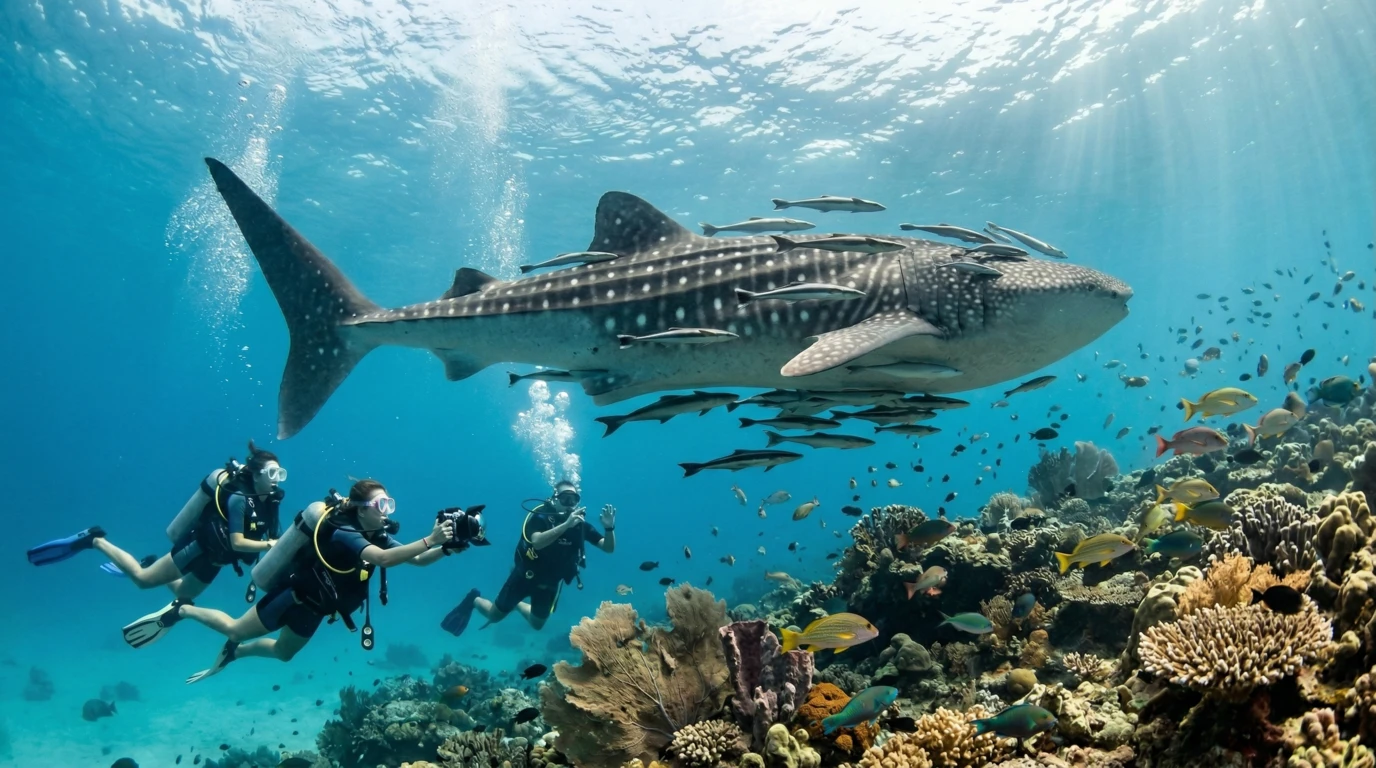
Top Spots in Thailand to Encounter Whale Sharks
If you want to increase your chances of a sighting, the Northern Andaman sites are your best bet. Richelieu Rock is world-famous as a “Whale Shark Magnet” due to its rich nutrients. Other sites like Koh Bon or the Similan Islands also frequently see these giants cruising through during the peak of the season.
Whale Shark Etiquette: Essential Rules for Every Diver
To ensure sustainable encounters, there are strict rules every diver must follow:
-
Maintain Distance: Stay at least 3-4 meters away from the body and 5 meters away from the tail.
-
No Touching: Their skin is sensitive, and oils or bacteria from human hands can cause harm.
-
No Flash Photography: High-intensity flashes can startle them and irritate their eyes.
-
Don’t Block Their Path: Never swim in front of the shark; always stay to the side to let them move freely.
Conservation: Protecting Our Gentle Giants
Whale sharks are currently listed as an endangered species. They face threats from habitat loss, boat strikes, and plastic pollution. The simplest way to help is to practice responsible diving, never throw trash into the sea, and choose dive operators who prioritize environmental protection. Sharing knowledge about their behavior helps build a community that respects and protects these giants for future generations.
Summary: The Magic of Sharing the Water with Giants
In Summary, the whale shark is not just the largest fish in the sea; it is a symbol of the ocean’s gentleness and ecological health. Their calm behavior and incredible migrations remind us of the beauty and mystery of nature. Sharing a moment underwater with a whale shark is a priceless experience that stays with you forever. By approaching them with respect and proper diving etiquette, we can ensure that the Andaman Sea remains a safe haven for these majestic creatures for years to come.
Frequently Asked Questions
Q1: How fast do whale sharks swim? Can I keep up with them?
A1: They usually swim quite slowly, but because they are so large, one flick of their tail covers a lot of distance. It is best not to try and chase them; just stay still and enjoy the moment as they glide past you.
Q2: What should I do if I see a whale shark while snorkeling?
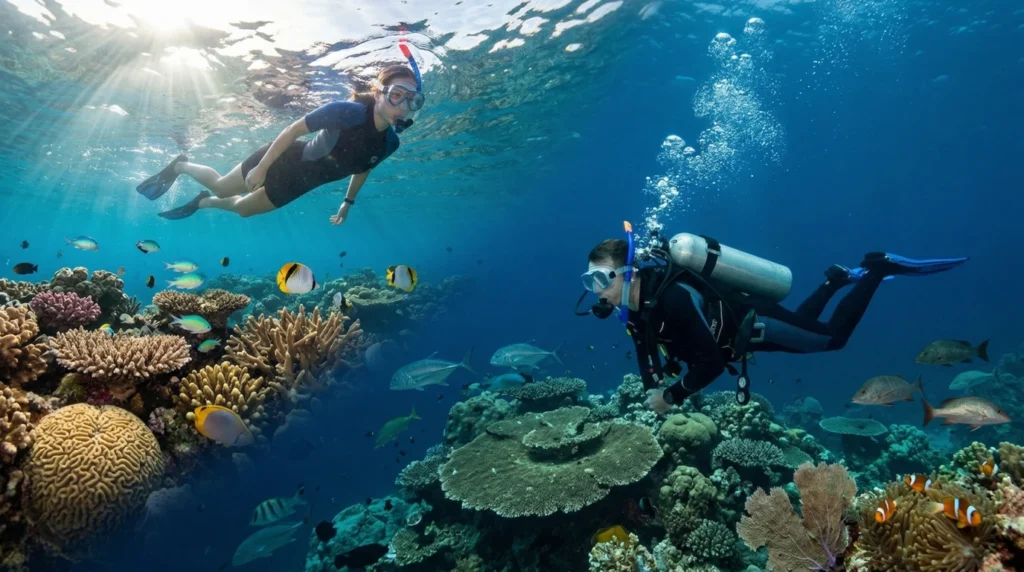
A2: Float calmly on the surface, maintain your distance, and avoid making big splashes. Loud noises or jumping into the water near them can cause them to dive away immediately.
Q3: How long do whale sharks live?
A3: Scientists estimate that whale sharks can live between 70 to 100 years! They are one of the longest-living species in the ocean.
Q4: Will I see a whale shark every day during the diving season?
A4: Not necessarily. Because they are migratory and follow food, sightings depend on luck and the abundance of plankton in the water at that specific time. Every encounter is a special gift from the ocean!