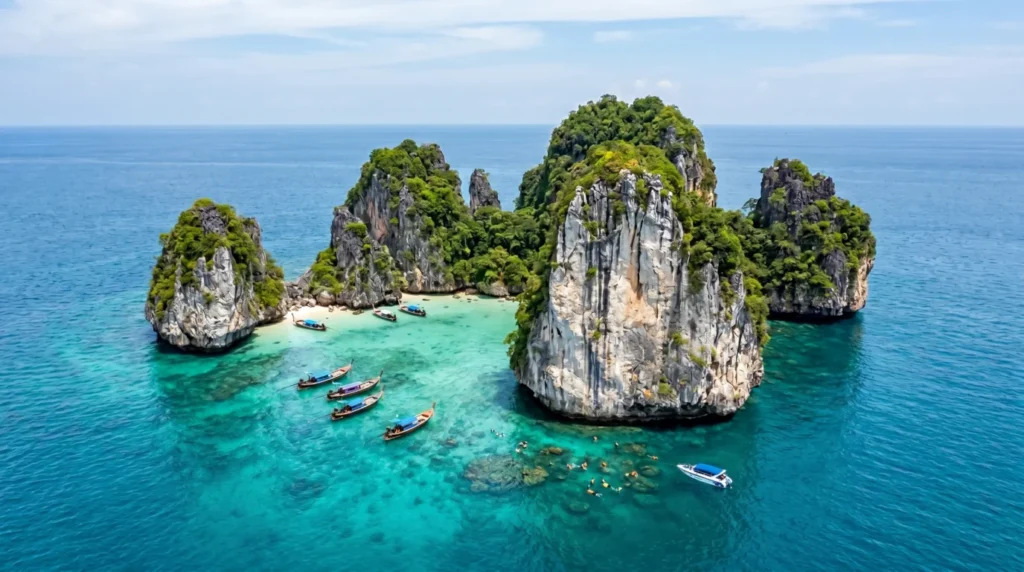
If there is one dive site in the Andaman Sea that consistently appears at the top of every serious diver’s bucket list, it is Elephant Head Rock. Known in Thai as Hin Pousar, this extraordinary site sits at the southern tip of Koh 8 — the eighth island of the Similan Islands National Park in Phang Nga Province — and has earned a global reputation as one of the finest dive sites in all of Asia.
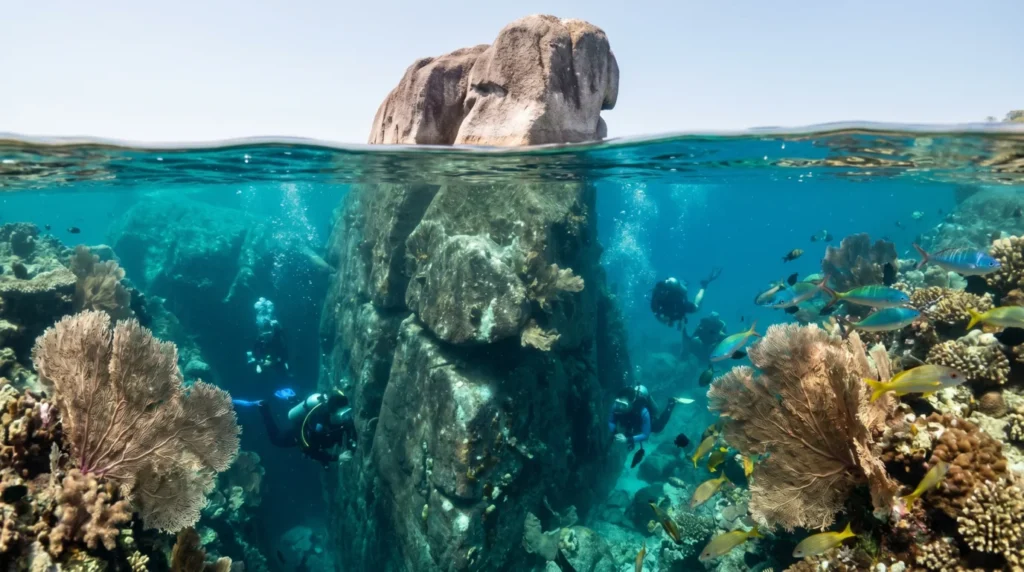
The name itself comes from the distinctive granite boulders that break the surface above the waterline. Viewed from a distance, the rock formation bears a striking resemblance to the head of an elephant with its trunk dipping toward the sea. But the real story of this place unfolds beneath the surface, where a labyrinth of tunnels, swim-throughs, and caverns carved by nature over millions of years awaits anyone willing to descend.
For divers who have experienced it, Elephant Head Rock tends to divide the timeline of their diving life into two distinct chapters: before and after.
The Underwater Geography: A Three-Dimensional Granite Maze
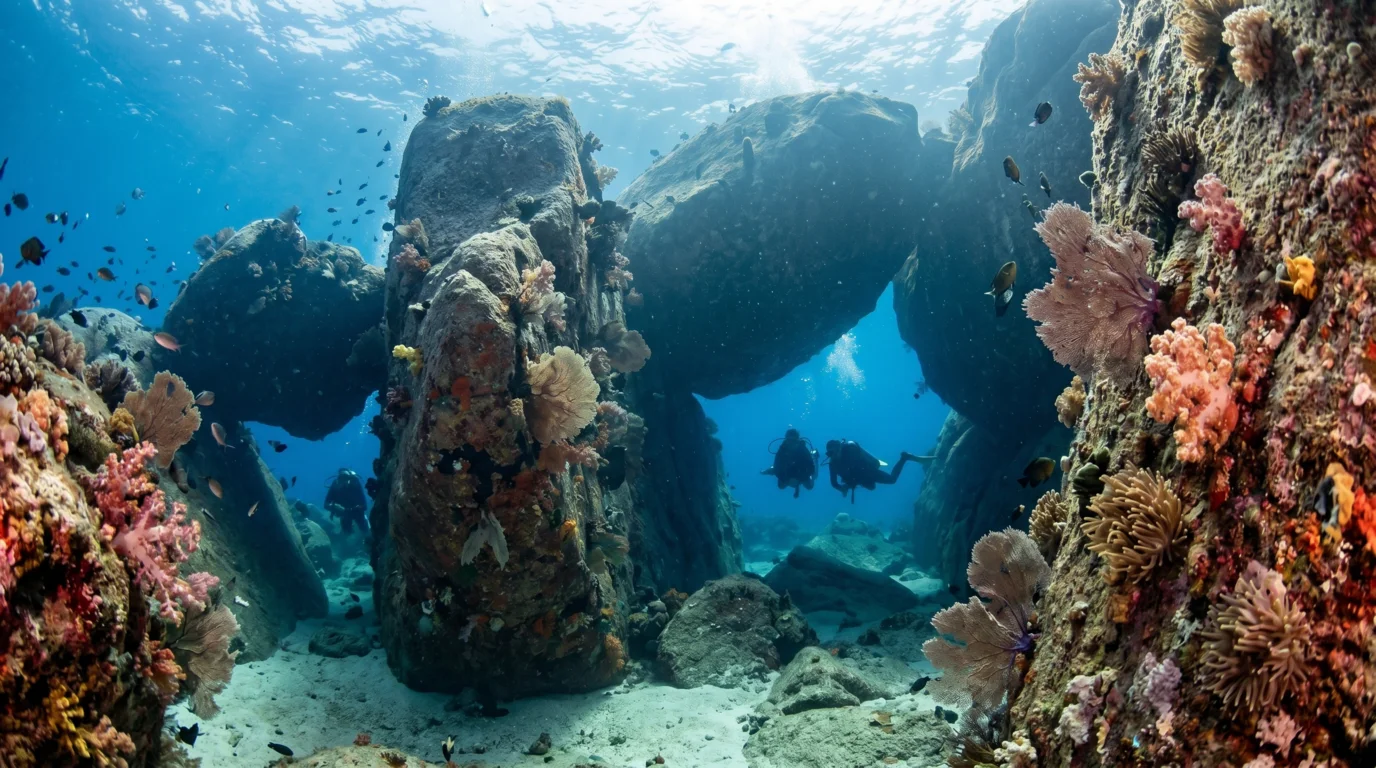
What separates Elephant Head Rock from virtually every other dive site in the region is its physical structure. Enormous granite boulders, some the size of houses, have tumbled and stacked upon one another over geological time to create a complex three-dimensional environment that extends from just below the surface all the way down to a sandy bottom at approximately 30 metres.
The result is a network of tunnels, arches, chimneys, and open passages that run in multiple directions simultaneously. Divers can slip through a narrow gap between two boulders and emerge into an open chamber flooded with blue light, then descend through another passage and find themselves on the sandy plain below, surrounded by an entirely different cast of marine life.
No two dives at Elephant Head Rock follow exactly the same route. The site is large enough and complex enough that even divers who have visited dozens of times continue to discover angles and passages they had not noticed before. This inexhaustible quality is one of the primary reasons the site holds its appeal across so many years and so many return visits.
Depth at the site ranges from approximately 5 metres at the shallowest boulder tops to around 30 metres on the sandy floor below, giving the dive a natural structure that suits both shallower exploration and deeper navigation depending on the diver’s preference and certification level.
Marine Life: What Lives Inside the Granite Labyrinth
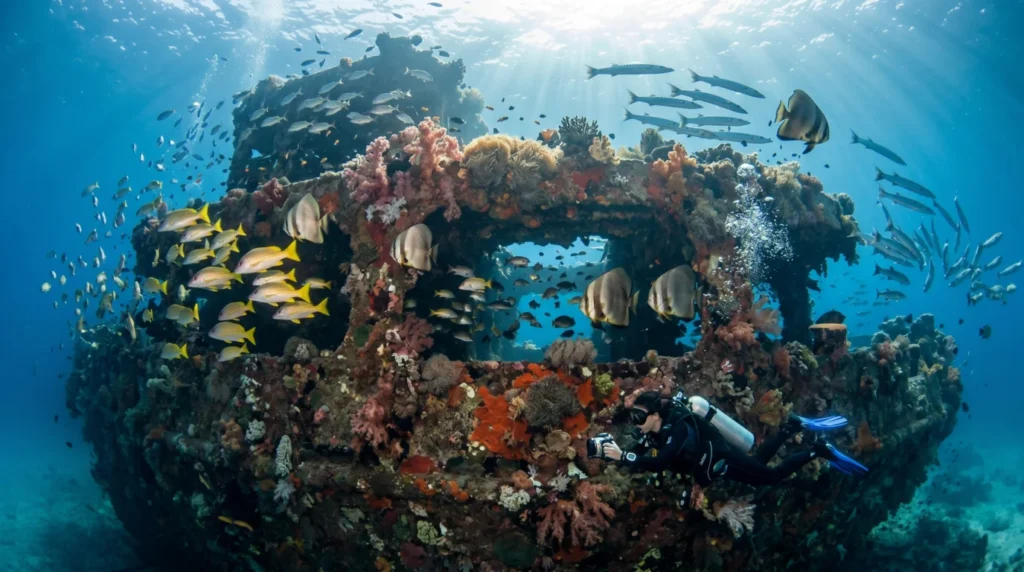
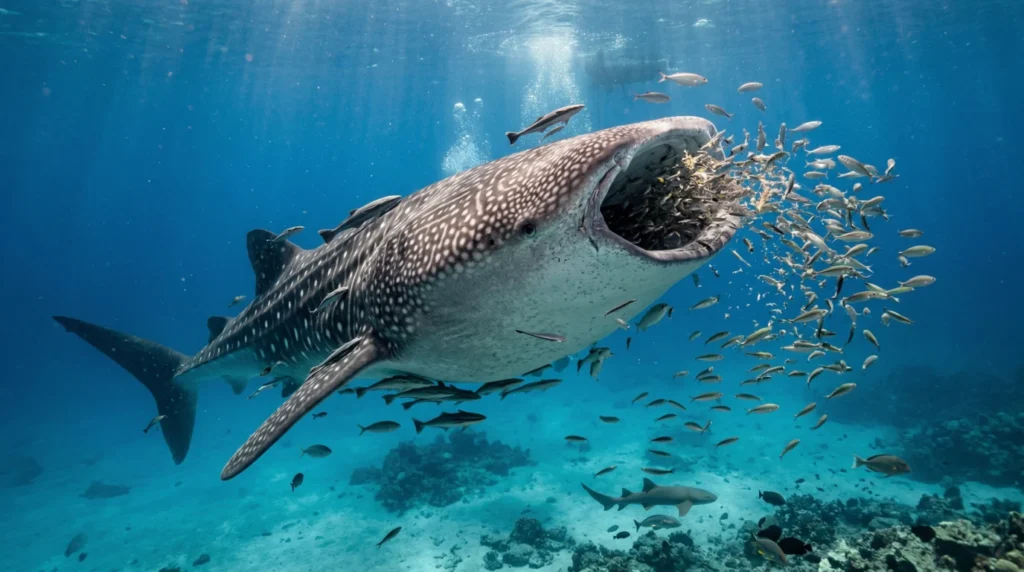
Elephant Head Rock supports an exceptional diversity of marine life, much of it concentrated within the tunnels and along the boulder walls where current-driven nutrients feed a thriving ecosystem. The list of regular sightings is genuinely impressive:
- Whale sharks — seasonal visitors that generate considerable excitement whenever they appear
- Manta rays — gliding elegantly along the rock faces and open water nearby
- Scalloped hammerhead sharks — most commonly encountered in the early morning during stronger current
- Napoleon wrasse — large, unhurried, and remarkably unbothered by divers
- Lionfish — tucked against coral-covered boulder surfaces
- Giant moray eels — occupying crevices throughout the structure
- Clownfish — nestled in anemones anchored to the rock walls
- Reef whitetip sharks — resting on the sandy bottom below the boulders
Beyond the larger species, the walls themselves are covered in a dense layer of soft corals, sea fans, barrel sponges, and encrusting organisms that transform every surface into something worth examining closely. The interplay of light and colour inside the tunnels — where sunlight filters down through gaps in the granite above — creates an atmosphere that underwater photographers find endlessly compelling.
For divers interested in dedicated manta ray and whale shark encounters at nearby sites, Koh Bon and Koh Tachai: Paradise for Manta Rays and Whale Sharks offers a detailed look at what those sites have to offer.
Currents at Elephant Head Rock: The Challenge That Makes It Worth It
The currents at Elephant Head Rock are a defining feature of the experience — and a reason why the site is not recommended for inexperienced divers. Water flows through the channels between the granite boulders with considerable force, particularly during tidal peaks, and the direction and strength of that flow can change within a short period of time.
For experienced divers, however, this is precisely the point. Strong currents are what bring the pelagic species — hammerheads, mantas, whale sharks — close to the site. They are also responsible for the exceptional health of the coral and invertebrate life on the boulder walls, delivering a constant supply of nutrients that sustains the density of marine growth visible throughout the site.
Drift diving with the current at Elephant Head Rock, allowing the flow to carry you along the boulder field while the marine life moves around you, is an experience that many divers describe as among the most exhilarating of their diving career. The key is reading the current correctly before entering the water and planning the dive route so that the flow works in your favour rather than against you.
Experience Level: Who Should Dive Here
Elephant Head Rock is classified as an intermediate to advanced dive site, and that classification is appropriate. The combination of strong and variable currents, complex three-dimensional navigation, and maximum depths reaching 30 metres means this is not a site for newly certified divers without proper supervision.
Recommended minimum experience sits at around 20–30 logged dives, with solid buoyancy control being particularly important. Poor buoyancy inside the tunnels risks contact with coral-covered surfaces and increases the difficulty of navigating through narrow passages safely.
That said, the shallower sections of the site — particularly the boulder tops at 5–10 metres — can be appropriate for less experienced divers when conditions are calm and a qualified guide maintains close supervision throughout the dive. The site is large enough that different sections offer meaningfully different levels of challenge.
Best Time to Dive Elephant Head Rock
The Similan Islands National Park operates on a seasonal schedule, opening to visitors from approximately October through May each year and closing during the monsoon season to allow the marine environment to recover. Diving at Elephant Head Rock is only possible during this open period.
Within the season, conditions vary considerably:
- December – March — peak season with the best visibility, calmest seas, and the highest chance of encountering pelagic species. Visibility commonly exceeds 20–30 metres during this period.
- November and April–May — the shoulders of the season, with generally good conditions but a higher likelihood of surface chop and slightly reduced visibility compared to peak months.
Divers hoping specifically to encounter whale sharks should note that March and April tend to offer the highest probability of sightings in Similan waters, though no encounter can ever be guaranteed.
How to Get There: Planning Your Visit to Elephant Head Rock
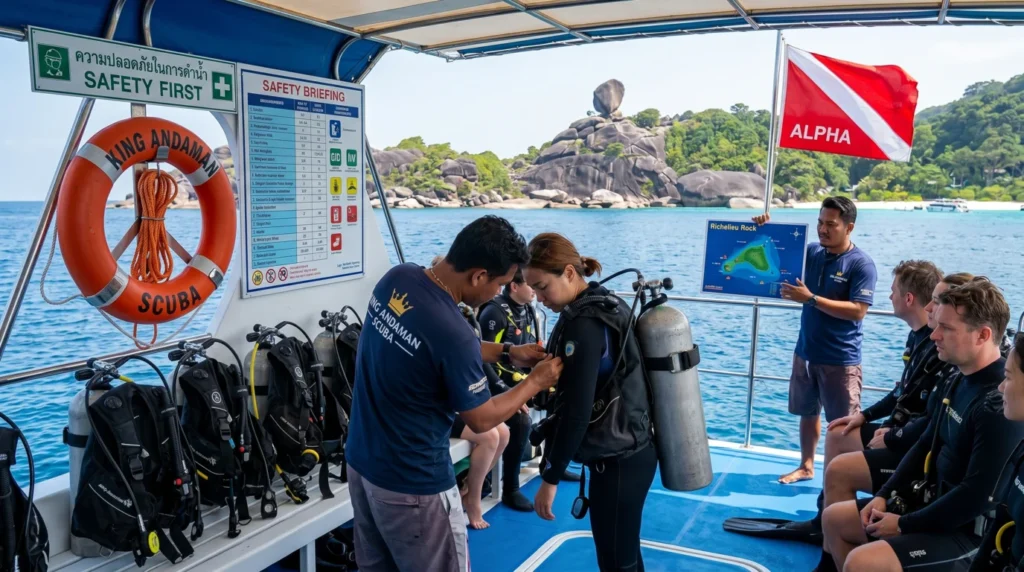
Elephant Head Rock cannot be reached independently from shore. The site lies approximately 70–80 kilometres from Khao Lak’s main pier, placing it well beyond the range of a casual boat trip. Access requires either a day trip by speedboat or a liveaboard dive cruise — and the choice between the two significantly shapes the overall experience.
Day Trip: A speedboat departure from Khao Lak in the early morning takes roughly 2–3 hours to reach the site. Divers typically complete 2–3 dives before returning to shore in the late afternoon. This option suits those with limited time who still want to experience the Similans without committing to multiple days at sea.
Liveaboard: Widely considered the superior option by most experienced divers, a liveaboard cruise allows diving at the optimal times of day, access to multiple sites across the Similan archipelago, and the possibility of night dives at locations that day trips cannot reach. The unhurried pace of a liveaboard also makes it easier to dive Elephant Head Rock more than once — something most divers feel strongly motivated to do.
For full details on dive trips and liveaboard options departing from Khao Lak, visit King Andaman Scuba Diving Khao Lak.
Equipment Recommendations for Diving Elephant Head Rock
The specific conditions at this site make certain pieces of equipment more important here than at calmer, shallower alternatives:
- Dive torch — essential for exploring the darker sections of the tunnels, where ambient light diminishes considerably. Carrying a backup light is strongly advisable.
- SMB (Surface Marker Buoy) — critical for signalling your position when surfacing, particularly on days when current has carried you away from the boat’s original position.
- 3–5mm wetsuit — water temperature in the Similans ranges from approximately 26–30°C, though cooler water is possible at depth and inside shaded tunnel sections.
- Dive computer — necessary for monitoring depth and bottom time across a site with significant depth variation.
- Reel or line — relevant for divers with cave or cavern training who intend to navigate deeper into enclosed sections of the boulder structure.
Elephant Head Rock vs Other Similan Dive Sites
The Similan Islands offer a strong selection of dive sites, each with a distinct character. East of Eden is celebrated for its dense hard coral gardens. Fantasy Reef offers impressive soft coral walls. Breakfast Bend is known for its accessible layout and reliable fish life.
Elephant Head Rock occupies a category of its own. No other site in the Similans — or arguably in Thailand — replicates the three-dimensional granite tunnel experience that defines this location. The physical environment alone would make it remarkable, but combined with the pelagic species drawn by the currents and the extraordinary marine density throughout the structure, it stands apart in a way that is immediately obvious to anyone who has dived it.
For divers who want to extend their Andaman Sea exploration beyond the Similans, the legendary Richelieu Rock is another benchmark site worth serious consideration. A detailed breakdown of what to expect there is available at Richelieu Rock: Thailand’s Number One Dive Site in Depth.
Tips from Experienced Divers: Getting the Most from Your Dive
A few practical observations from divers who know this site well:
- Use the first dive to orient yourself within the boulder field before committing to the tunnels. Rushing into the enclosed sections on an unfamiliar dive rarely ends with the best experience.
- Assess current direction and strength before entering the water on every dive, and plan your route so the flow carries you outward rather than deeper into the structure.
- Early morning — before 8am — is consistently the most productive time for encountering hammerhead sharks near the site.
- Avoid touching or disturbing any surface inside the tunnels. The coral growth throughout the structure has taken decades to develop and is easily damaged by contact.
- For official information on park access, fees, and seasonal status, the Department of National Parks, Wildlife and Plant Conservation maintains updated information on the Similan Islands National Park.
Summary: Why Elephant Head Rock Deserves Its Legendary Status
To sum up, Elephant Head Rock earns its reputation honestly. The site delivers something genuinely rare in diving: an environment so physically distinctive, so biologically rich, and so technically engaging that it remains rewarding across multiple visits regardless of how much experience a diver brings to it.
The granite tunnels, the pelagic encounters, the quality of light inside the chambers, the diversity of life on every surface — these are not things that diminish with familiarity. If anything, divers who return to Elephant Head Rock repeatedly tend to find that understanding the site more deeply only increases their appreciation of what makes it exceptional.
If you are planning a diving trip to the Andaman Sea and Elephant Head Rock is not already on your itinerary, consider this your strongest possible encouragement to put it there.
Frequently Asked Questions
Q: Is Elephant Head Rock suitable for beginner divers?
A: Not recommended for complete beginners. At least 20–30 logged dives and solid buoyancy control are advised before diving here.
Q: When is the best time to dive Elephant Head Rock?
A: December through March offers the best visibility and calmest conditions. The park is open October through May only.
Q: What equipment is essential for this dive site?
A: A dive torch, SMB, and dive computer are the three most important items given the tunnels, currents, and depth variation.
Q: Can Elephant Head Rock be visited on a day trip?
A: Yes, though a liveaboard is strongly recommended for a fuller experience and the ability to dive the site more than once.