Before You Know Koh Ha and Koh Rok, Your Diving Life Is Not Yet CompleteThere are certain dive sites that, once experienced, make every previous trip feel like a warm-up. Koh Ha and Koh Rok are exactly those places.
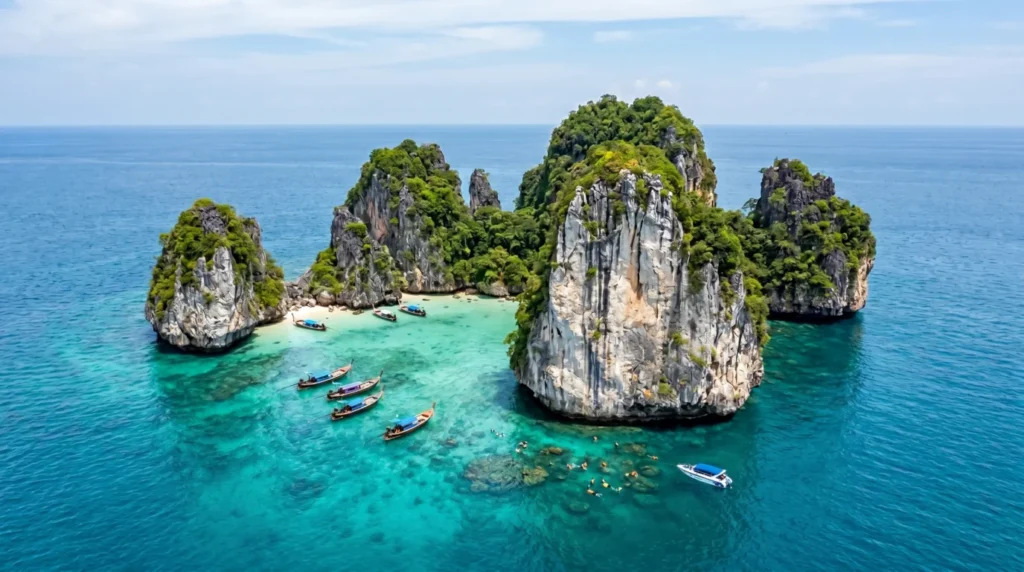
Both island groups lie in the waters of Krabi Province, approximately 30–40 kilometres south of Koh Lanta, and fall under the protection of Hat Chao Mai–Khao Phra Baen National Park. Their names may not carry the same immediate recognition as the Similan or Surin Islands among general tourists, but among divers who know the Andaman Sea well, these two destinations consistently come up when the conversation turns to the most memorable diving in Thailand.
What sets Koh Ha and Koh Rok apart is not simply their beauty. It is the feeling — unmistakable the moment you descend — that you have arrived somewhere nature still controls the terms, and tourism has not yet managed to tip the balance. For further context on the geography and natural setting of this region, the Krabi Province — Wikipedia entry provides a useful overview of the broader area.
The Cave That Makes Divers Stop Breathing: Koh Ha Cavern Is Unlike Anywhere Else on Earth
If one image could represent Koh Ha completely, it would be the blue-green light filtering down through the mouth of the cave and reflecting off the limestone walls inside Koh Ha Cavern. This underwater cavern is the centrepiece of diving at Koh Ha, and it ranks among the most discussed and sought-after experiences across all dive sites on the Andaman coast.
The cavern is large enough for several divers to move through simultaneously without crowding. At the entrance, natural light filters through the clear water above and transforms into a colour that no single word in any language fully captures. Moving deeper inside, the light gradually softens, the temperature drops slightly, and the atmosphere shifts entirely from that of open-water diving into something more enclosed, more intimate, and considerably more dramatic.
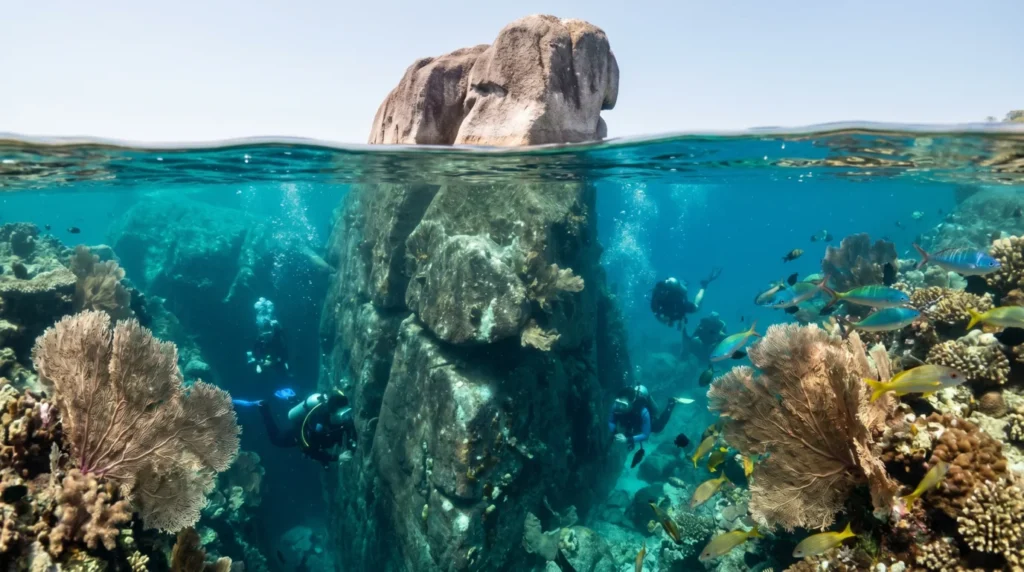
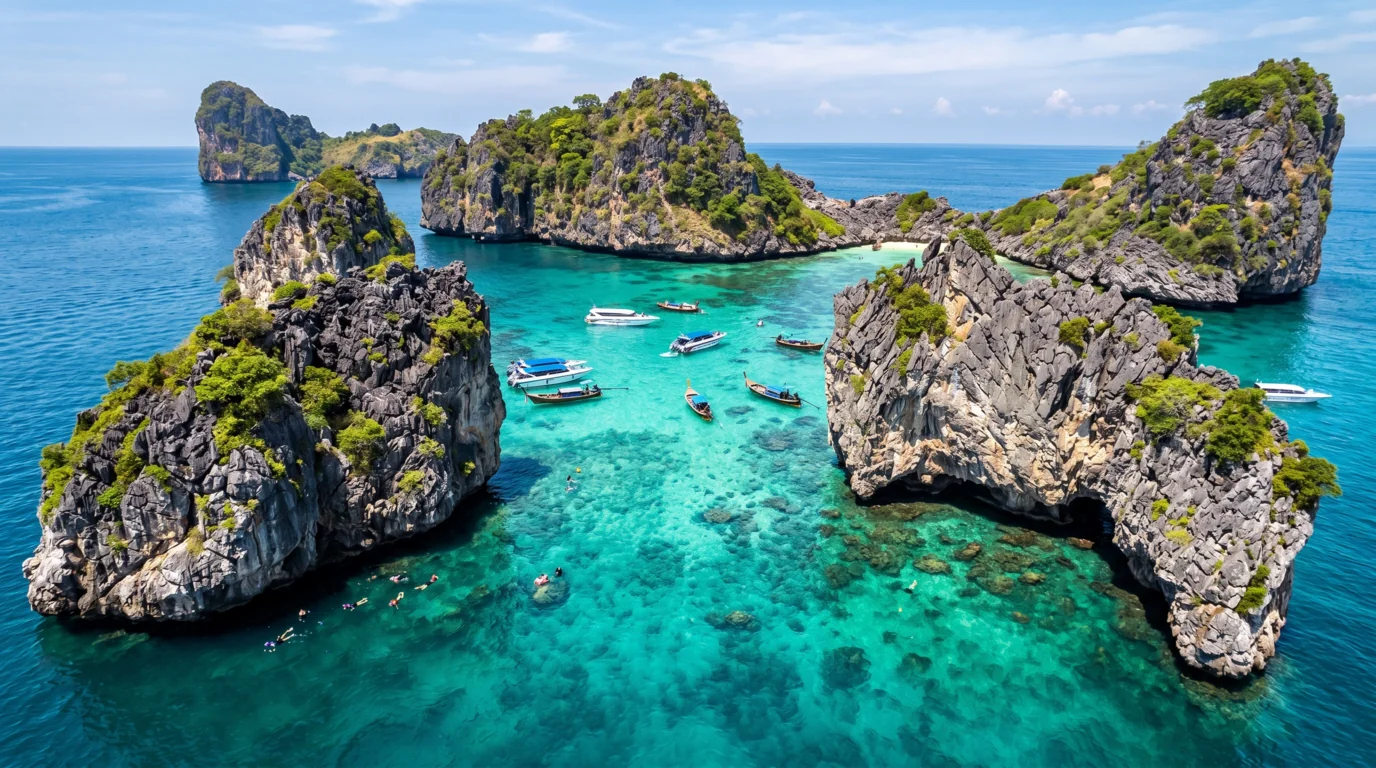
Beyond the cavern itself, Koh Ha offers limestone walls draped in soft corals and sea anemones, narrow channels between the five small islands that generate gentle currents ideal for relaxed drift diving, and sandy floors surrounding the site that conceal far more bottom-dwelling life than most divers expect. Depths range from approximately 5 to 25 metres, making the site genuinely accessible to divers from newly certified Open Water level through to the most experienced.
Koh Rok: A Sea That the Modern World Has Not Yet Managed to Damage
A short distance from Koh Ha, Koh Rok consists of two main islands — Koh Rok Nok and Koh Rok Nai — sitting close together, and the waters between them contain what many divers describe as some of the most intact coral reef they have ever encountered in their diving lives.
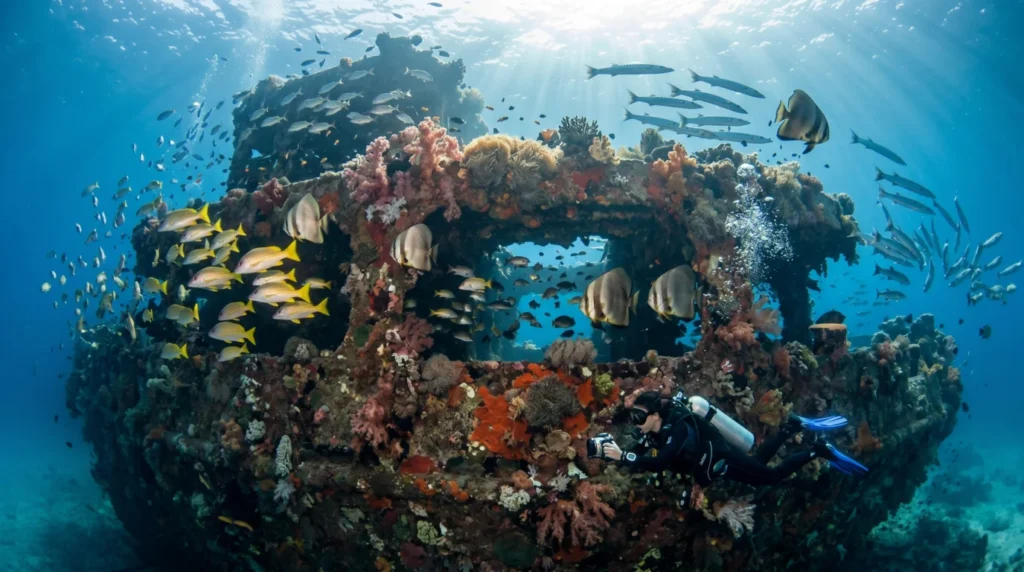
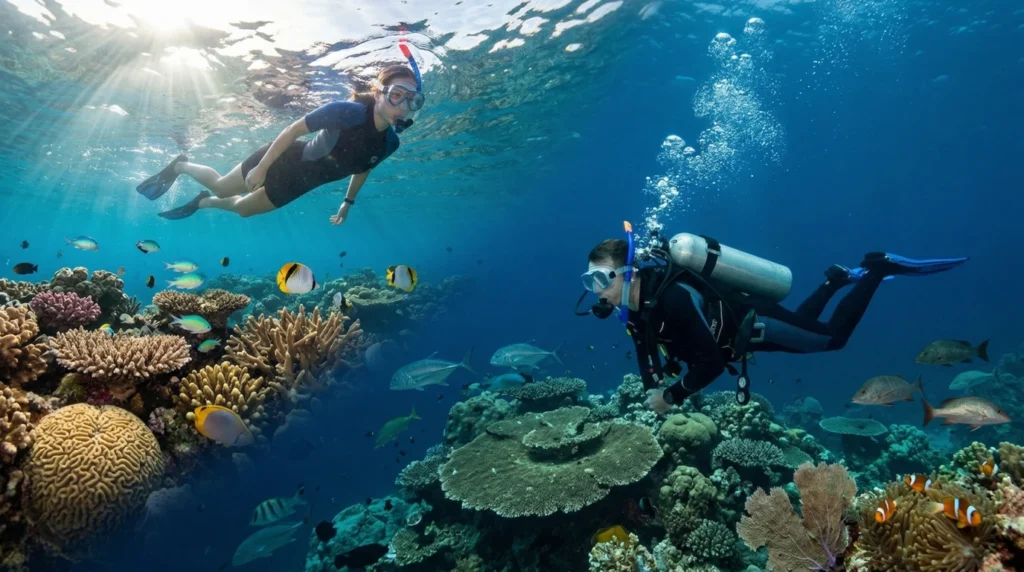
Table corals of impressive scale extending up from the seabed, brain corals that have taken decades to reach their current size, staghorn corals branching outward in dense formations — all of these remain in a condition that is genuinely remarkable at a time when reef systems around the world are struggling with bleaching events and environmental pressure. The ecological significance of healthy coral reef systems like this is well documented; the Coral reef — Wikipedia article offers useful background on why sites like Koh Rok matter beyond their visual appeal.
What makes Koh Rok visually extraordinary is the way sunlight penetrates the clear water all the way to the seabed, illuminating every coral formation with an intensity that makes the colours appear almost artificially vivid. On the calmest days, the reef is clearly visible from the surface — something that remains genuinely rare across Thai dive sites and serves as an immediate measure of just how clean the water here truly is.
The Marine Life Here Is Not Afraid of People, and That Is Exactly What Makes Everything Special
One of the qualities that distinguishes Koh Ha and Koh Rok from sites that receive heavier visitor numbers is the behaviour of the marine life. Animals throughout both sites retain a naturalness and lack of wariness around divers that makes every encounter feel like entry into their world rather than an intrusion upon it.
The marine life most commonly and memorably encountered across both sites includes:
- Sea turtles — both green turtles and hawksbill turtles are found in significant numbers, particularly at Koh Rok, which serves as an important feeding ground. They approach and pass at close range without retreating.
- Blacktip reef sharks — moving through the shallows along the reef edge with complete indifference to divers nearby
- Manta rays — encountered at Koh Ha during periods of stronger current
- Parrotfish — grazing the coral in large, colourful schools that bring constant movement to the reef
- Nudibranchs — brilliant in colour and hidden throughout the coral structure, a particular draw for macro photographers
- Clownfish — resident in anemones along the reef in characteristic numbers
- Moray eels — extending their heads from crevices along the full length of both sites
Why the Water Here Looks Like There Is No Water at All
The exceptional underwater visibility at Koh Ha and Koh Rok is not accidental. Several specific and reinforcing factors combine to produce conditions that divers from elsewhere consistently describe as among the clearest they have experienced anywhere.
The first is location. Both island groups sit far enough offshore that terrestrial runoff carrying sediment and organic matter from the mainland does not reach them in meaningful quantities. This alone places the baseline water clarity significantly above that of nearshore dive sites that receive direct land influence.
The second is the national park designation that governs both sites. Strict controls on boat numbers, visitor activity, and anchoring practices mean that the kind of mechanical disturbance that clouds water at more heavily trafficked locations simply does not occur here at comparable levels.
The third — and arguably most important — is consistent current movement through the area, which continuously carries any suspended particulate matter away from the site. The combined effect is visibility that during peak season regularly reaches 20–30 metres, and on the clearest days can exceed that figure, placing Koh Ha and Koh Rok in a category of underwater clarity that very few sites in Thai waters can match.
One Trip, Two Worlds: How to Plan Your Koh Ha and Koh Rok Diving for Maximum Value
The intelligence of combining Koh Ha and Koh Rok within a single trip lies in the fact that the two sites have entirely different characters, meaning a single day on the water delivers a range of experience that would otherwise require multiple separate journeys.
Koh Ha suits divers who enjoy exploring underwater structure, want the experience of cavern diving, and are drawn to environments with strong three-dimensional character and interesting light. Koh Rok suits divers who want to move through brilliant open-water reef, hope to encounter sea turtles in their natural habitat, and prefer the more expansive, luminous quality of a healthy shallow coral garden.
Most operators combine both sites within a single programme, typically diving Koh Ha first in the morning when conditions are freshest before moving to Koh Rok in the afternoon. This sequencing gives divers both the cave and the coral in a single day — an arrangement that the majority of those who have done it describe as considerably more satisfying than visiting either site alone. Divers interested in understanding more about the different physical demands and environments of various diving styles before their trip will find the article Scuba Diving vs Snorkelling — What Is the Difference? a helpful read.
The National Park Is the Best Protection These Sites Have Ever Had
The condition in which Koh Ha and Koh Rok exist today is directly attributable to their status within Hat Chao Mai–Khao Phra Baen National Park, which imposes clear and enforced regulations on human activity throughout the area.
Key requirements include payment of park entry fees before access, a complete prohibition on touching or standing on coral, no collection or removal of any living organism from the site, and strict rules against waste disposal at sea. Daily visitor and vessel numbers are managed to remain within the carrying capacity of the ecosystem rather than being determined by demand alone.
The park’s seasonal closure during the monsoon months — allowing the marine environment to recover from visitor pressure before the next season begins — is one of the primary reasons the coral here remains in the condition it does. In an era when reef degradation is a global concern, the management model applied at these sites offers a clear demonstration of what consistent, enforced protection can achieve over time.
Everything You Need to Know Before You Board: Departure Points, Timing, and What to Bring
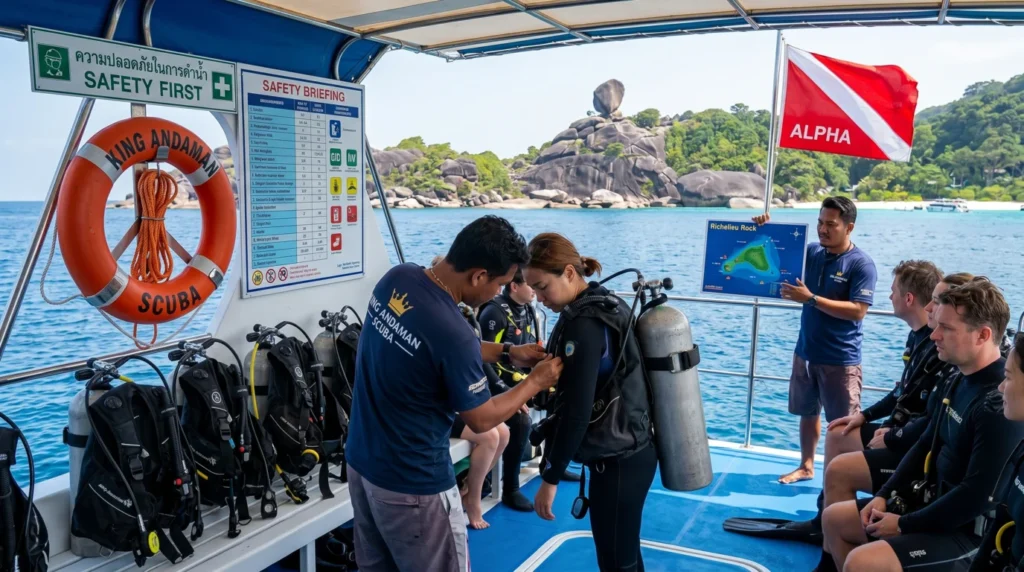
The main departure point for Koh Ha and Koh Rok is Koh Lanta, from which a speedboat reaches the sites in approximately 45–90 minutes depending on sea conditions. Departures are also available from Krabi Town at a journey time of around two hours. Divers based in Khao Lak who wish to incorporate these sites into a broader Andaman itinerary will find that certain operators offer combined programmes covering multiple areas.
Practical items to have ready before boarding:
- All current dive certifications, as staff may request to see them before the dive
- Motion sickness medication if needed, as some sections of the crossing can be choppy
- Reef-safe sunscreen exclusively — standard sunscreen formulations cause measurable damage to coral and are best left at home entirely
- An underwater camera or housing, given that both sites offer photographic conditions that are difficult to find elsewhere
- Cash for national park entry fees, which are typically not payable by card
For complete dive package information and Andaman Sea itinerary options, full details are available at King Andaman Scuba Diving Khao Lak.
The Best Frame of Your Life: An Underwater Photography Guide for Koh Ha and Koh Rok
The clarity of the water at both sites represents an advantage for underwater photographers that is difficult to overstate. Natural light penetrates to the seabed at an intensity that makes ambient-light photography — without a strobe — genuinely viable in a way that murky or deeper sites simply do not allow.
At Koh Ha Cavern, the classic approach is to position inside the cave and shoot outward toward the entrance, using the cave mouth as a natural frame. The silhouette of a diver against the blue light beyond produces an image that is compositionally strong almost regardless of the specific conditions on any given day. It is the kind of shot that requires almost no post-processing to be immediately compelling.
At Koh Rok, wide-angle compositions of the hard coral garden during direct overhead light render colours with an accuracy and vibrancy that strobe-dependent photography in darker conditions rarely matches. Sea turtle portraits in clear water with natural light as the background represent one of the most shared categories of underwater imagery from this site among divers globally, and the conditions here make achieving that shot far more accessible than at most comparable locations.
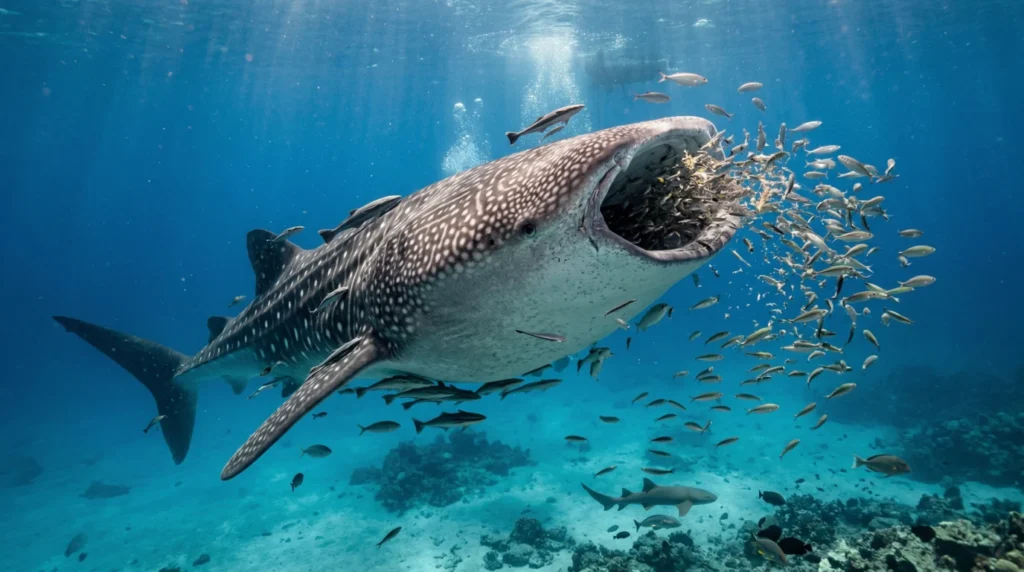
Divers who want to read more about whale shark behaviour — another species occasionally encountered in these waters during the right season — will find Fascinating Whale Shark Behaviour worth reading before the trip.
Summary: Koh Ha and Koh Rok Are Not Simply Dive Sites — They Are the Kind of Experience That Changes How You See the Ocean
What Koh Ha and Koh Rok offer is not reducible to beautiful images or a checklist of species encountered. The deeper quality of both sites is the feeling that you have reached somewhere the ocean is still functioning on its own terms — where the reef grows because the conditions support it, where the turtles feed because the food is there, and where the water is clear because nothing has disrupted it enough to make it otherwise.
The cave at Koh Ha that stops divers mid-breath. The coral at Koh Rok that has never learned what degradation looks like. The turtle that passes at arm’s length without registering your presence as a threat. The water so clear that occasionally moving a hand through it is the only reliable confirmation that you are actually underwater. These things together form a trip that almost every first-time visitor describes wanting to repeat — and that, in the end, is the most honest recommendation any dive site can receive.
Frequently Asked Questions
Q: Are Koh Ha and Koh Rok suitable for beginner divers?
A: Yes — shallow depths, calm currents, and excellent visibility make both sites welcoming for all experience levels.
Q: How likely is it to see sea turtles here?
A: Very likely, particularly at Koh Rok, which is an active feeding ground. Turtle sightings occur on nearly every dive.
Q: Should you visit Koh Ha or Koh Rok first?
A: Visit both on the same trip — most operators combine them in a single programme, and the contrast between the two sites makes the experience far richer.
Q: What is the best time of year to dive here?
A: November through April offers the clearest water, calmest seas, and most consistent conditions for diving at both sites.